
Influenced: The Second Shift
Behind the growing number of young women juggling work, study and the pursuit of fame online.
The 'daily grind' once came with a fairly simple premise: clock in, out, sleep, repeat. For the young women of today, there is now another possibility waiting on the other side of the traditional working day.
Across bedrooms, commutes and weekends, a growing number of women are filming, editing, posting and pitching to brands, simultaneously completing degrees or in employment.
For some, influencing isn’t replacing the day job (at least, not yet!) - it’s becoming more of a second shift.
In a 2025 US survey, one in four Gen Z adults said their ideal career would combine conventional employment with professional content creation.
When the side-hustle is side-hustling
For Ella, creating content started as something exciting. Then everything else began coming second.
Ella Williamson, 22, has always loved social media. It was during Covid, as outfit-of-the-day videos and ‘spend the day with me’ vlogs filled feeds, that watching other creators turned into wanting to become one herself.
A close friend already building a platform encouraged her to start, even sending over a list of potential video ideas. Once Ella began posting regularly, opportunities followed.
PrettyLittleThing content days, gifted products and collaboration offers gave her a glimpse of where influencing could lead. She remembers receiving an early message from EGO while working an ordinary shift.
“I was on a buzz for the rest of the day"
“Every time you get another opportunity, it pushes you to do better and aim for something bigger.”
For Ella, the attraction was not difficult to understand. Social media offered her creativity, meeting new people and exciting opportunities that felt far removed from conventional employment.
But somewhere along the way, the side-hustle stopped staying on the side.
“When I should have been doing my dissertation or assignments, I’d be editing, posting, planning my next videos and reaching out to brands.”
Content days sometimes meant missing classes. Even at work, Ella found herself editing photos and videos on her phone.
“At that point, all I wanted to do was create content. Everything else came second.”
Eventually, her mum gave her the reality check she needed: “Ella, if this doesn’t work, you need something to fall back on.”
So, with only months of university remaining, Ella stepped away from posting and concentrated on finishing her degree.
The decision meant missed brand opportunities. Looking back through her collaboration messages later, she found approaches from brands including L’Oréal and Maybelline.
Now having graduated, Ella feels differently about the balancing act.
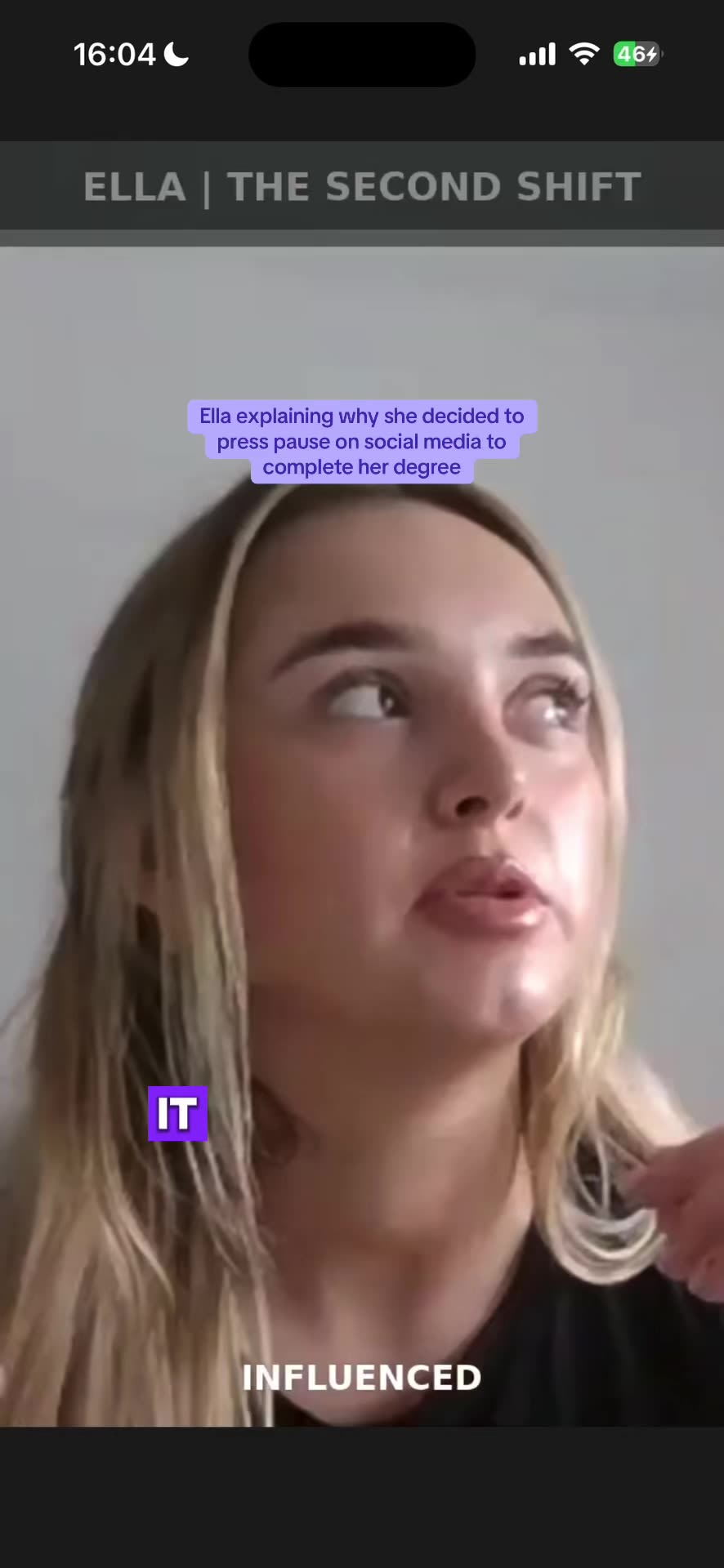
“I feel much more comfortable now that I have my degree,” she says. “If I didn’t have that and I was relying entirely on social media and then stopped, I wouldn’t know what my plan was.”

Credit: @ellawilliamson_ Instagram
Credit: @ellawilliamson_ Instagram

Credit: @ellawilliamson_ Instagram
Credit: @ellawilliamson_ Instagram
Clock in girl, your second shift is starting!
Behind a 30-second TikTok can be hours of work nobody scrolling past will ever see.
By the time Mohini Chunilal, 22, gets home from work, she has already been out of the house for more than 12 hours. Her corporate marketing job is in another city, meaning the alarm comes early and she is usually out of the door by six in the morning, not returning until after six that evening. Alongside that, she works a second job remotely during the week.
Somehow, she is managing to build a social media career around it all.
It is a balancing act that appears increasingly attractive to her generation. In a 2025 US survey, one in four Gen Z adults said their ideal career would combine conventional employment with professional content creation. A further 19% said their ideal career would be working as a content creator full-time.
(Source: Morning Consult, 2025)
For Mohini, those two worlds currently exist side by side. The evenings and weekends that might otherwise signal time off are instead filled with filming, editing, planning videos and pitching herself to brands, as she steadily builds a fashion and lifestyle platform she hopes could eventually become something bigger.
“It’s exhausting, very exhausting,” she admits. “Over the past few weeks especially, I’ve felt quite burnt out because I’ve pushed myself really far.”
Still, there is something about creating that keeps pulling her back. Mohini talks about editing videos from bed not as another chore on an already lengthy to-do list, but as something she genuinely enjoys.
“If I love it this much and know it’s what I want to do in the future, I’m willing to work as hard as I can now to try and get there.”
At around 2.000 followers, Mohini considers herself a small creator, but her platform is already beginning to open doors. PR packages have landed from brands she genuinely uses, alongside opportunities to produce user-generated content, offering small glimpses of the career she is working towards. Yet those opportunities rarely arrive simply solely because she posts a video and waits.
“You can’t just sit and wait for brands to come to you,”
There are emails to send and pitches to perfect, alongside the constant task of producing something capable of stopping a thumb mid-scroll. Even the opening seconds of a video have to be considered carefully; without an engaging hook, Mohini knows there is an endless stream of other content waiting beneath hers.
It is a reality far removed from how she once imagined influencing.
“Before I started making content, I had that mindset of, ‘I just get to film videos and people will pay me for it.’ It’s not like that whatsoever.”
But the ambition behind her platform is not purely financial. Fashion has always been part of Mohini’s long-term career plans, and her content has also become a space to celebrate her South Asian identity, weaving traditional jewellery and clothing into the everyday outfits she shares online.
“I love wearing South Asian earrings in my videos to show that even if you’re wearing jeans and a top, or going to your corporate job, you can still keep that as part of your identity and your style.”
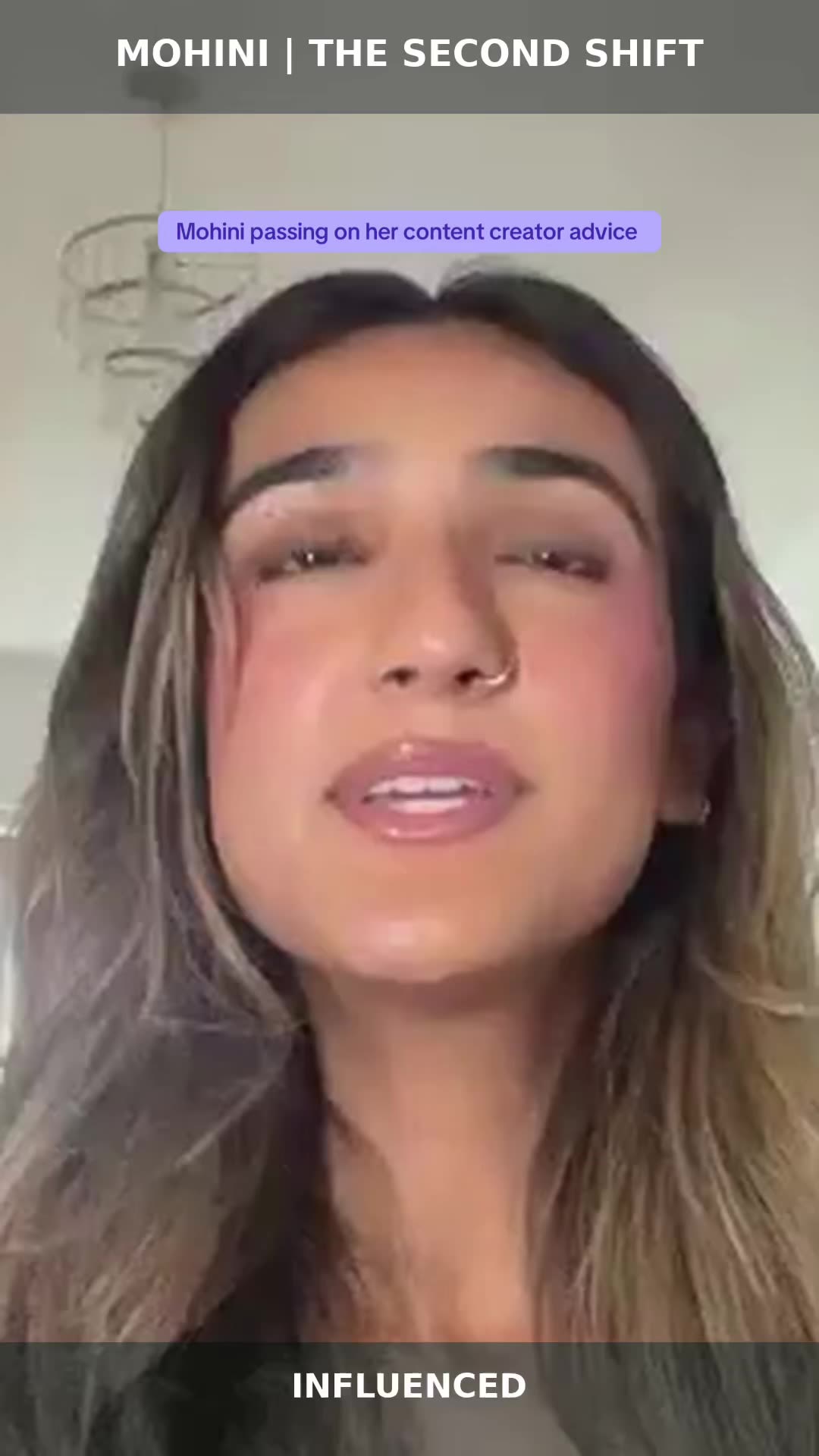
Perhaps that is why, despite the long days and occasional doubts about whether her growth is “actually going anywhere”, Mohini continues. Her version of online success is not simply a viral video or a seven-figure following, but building what she calls her “own little community”; an audience that trusts her, talks to her and finds something worth returning for.
For now, the nine-to-five provides stability. The hours around it are being spent trying to build the career she hopes might one day come next.

Credit: @mohinichunilal
Credit: @mohinichunilal

Credit: @mohinichunilal
Credit: @mohinichunilal
If the price is right...
Influencing promises independence and flexibility, but is this really sustainable?
Ella and Mohini are part of a generation spending more of their life online than ever before. In the UK, 18-to-34-year-olds spent an average of 50 minutes a day on Instagram and 43 minutes on TikTok in May 2025.
(Source: Ofcom, Online Nation 2025)
For some, observing social media's growth has developed into wanting a piece of it themselves. US research found 57% of Gen Z respondents would become an influencer if given the opportunity, whilst almost a quarter were already earning money from posting on social media.
(Source: Morning Consult)
Dr Krysten Stein, Assistant Professor of Communication at the University of Cincinnati Blue Ash College, argues that the attraction of creator careers cannot be separated from what is happening in the more traditional world of work.
Influencer culture, she says, has developed against a backdrop of “layoffs, stagnant wages, declining institutional loyalty, rising living costs and increasingly precarious forms of employment”.
Against that uncertainty, the prospect of flexibility, creativity and working for yourself can understandably look appealing.
But swapping the office for the algorithm does not necessarily mean swapping insecurity for freedom.
“I don’t think the creator economy represents an escape from those conditions,” Stein says. “In many ways, it reproduces them.”
Income can fluctuate, algorithms can change without warning and competition for attention is relentless. Meanwhile, much of the labour required to stay visible remains hidden behind the polished posts audiences eventually see.
“A thirty-second TikTok or an Instagram post may be all an audience ever sees, but behind it is an ongoing process of entrepreneurship, strategic decision-making, emotional labor and trust-building.”
Creators are not simply creating. Stein points to the business operating behind the screen; negotiating contracts, managing finances, studying analytics, maintaining relationships with brands and audiences and continually adapting to platforms that can determine whose content gets seen.
Traditional employment may offer greater stability, but not necessarily the autonomy many young people are searching for. Influencing offers the possibility of that independence, but brings an entirely different set of uncertainties. As Stein puts it, young women may not be choosing between stability and flexibility at all, but “between different forms of uncertainty”.
Ella chose to secure her degree before giving social media another shot. Mohini is holding onto her graduate career whilst building something of her own in the hours around it. Neither has abandoned the possibility that content creation could become something more.
For a generation of aspiring creators, the dream job might not begin with quitting the day job. It might begin with the second shift.


Credit: @dr_krysten Instagram
Credit: @dr_krysten Instagram
 Built with Shorthand